

Seabed Mining Requires More Science,
Not More Assumptions
Disturbing a Complex Marine Environment
Sediments are not simply layers of sand and mud. They serve as habitat, food sources, and long-term storage for contaminants and nutrients. Disturbing those sediments can alter water quality, increase turbidity, redistribute contaminants, and affect species that depend on stable ecosystems. These impacts can extend well beyond the immediate footprint of a mining operation through sediment plumes and changes to local ecological processes. Scientists continue to study these interactions because many remain poorly understood, particularly in offshore environments.
Baseline Data Must Come First
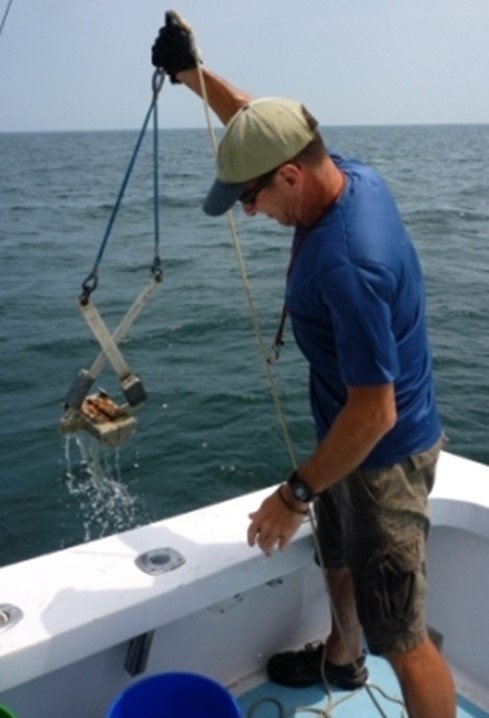
Throughout my career, I have evaluated contaminated sediment sites for ports, power companies, federal agencies, and the U.S. Navy. One lesson has remained remarkably consistent: sound environmental decisions begin with robust baseline data. Without understanding existing ecological conditions, it becomes extraordinarily difficult to measure impacts or develop effective mitigation strategies. That principle applies whether the project is a harbor dredging operation, a Superfund cleanup, or a proposed offshore mining project.
The waters off Virginia's Eastern Shore support commercial fisheries, migratory species, and complex marine habitats while also playing an important economic role for coastal communities. As federal agencies evaluate potential mineral leasing in the region, environmental characterization should not become a procedural checkbox. It must be the scientific foundation upon which every decision rests.
Let Science Define the Risk
Science should neither promote nor prohibit development. Its role is to reduce uncertainty, quantify risk, and provide decision-makers with credible information. If seabed mining moves forward anywhere along our coasts, the standard should not simply be whether it can be done. The more important question is whether we have collected enough scientific evidence to demonstrate that it can be done responsibly.
Contributing Editor: Cynthia M. Erickson-Recinos
Cynthia Erickson-Recinos is an environmental scientist with more than 20 years of experience in ecological risk assessment, contaminated sediments, marine toxicology, and environmental remediation. Her career has included work with federal agencies, the U.S. Navy, ports, and private-sector clients, evaluating complex environmental risks in coastal and marine environments.
Reach out today and let’s find ways to work together.
Chesapeake Analytics is part of the ExoConsulting, LLC family of companies. ExoConsulting, LLC is proud to be a Weather-Ready Nation (WRN) Ambassador. The WRN Ambassador initiative is a National Oceanic and Atmospheric Administration’s (NOAA) effort to formally recognize NOAA partners who are improving the nation’s readiness, responsiveness, and overall resilience against extreme weather, water, and climate events.
If you have made it this far, kudos! And thank you!